
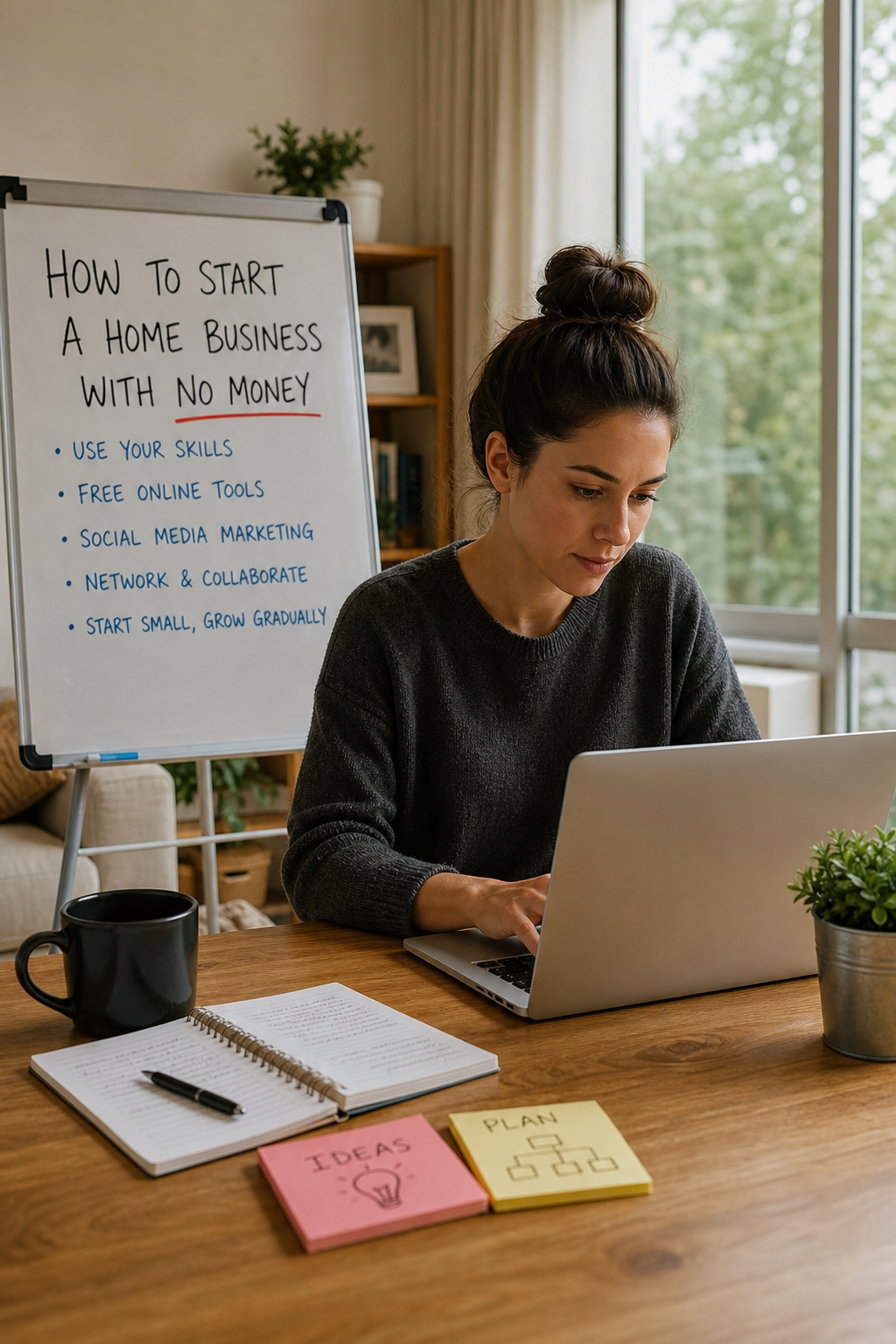
How to Start a Home Business with No Money
Hey there. If you want true freedom but your bank balance says no, you’re in the right place. You can start a home business with no money by using free tools, smart thinking, and a bias for action. We’ll map out a clear path: pick a low‑cost idea, test it, set up your home office with free tools, and launch without spending a penny. I’m Shush Arya, and we’ve helped hundreds of home‑based entrepreneurs turn small starts into real momentum. Today you’ll get a step‑by‑step plan that works in 2026, with practical tips you can implement this week. You’ll also s fit into a bigger plan, including a few strong cautions so you don’t hit hidden limits early on. Let’s dive in and build your business from home, with nothing to lose and everything to gain.
Over the coming sections you’ll learn how to identify a low‑cost idea, validate it with quick market checks, set up a home office using only free tools, and launch with zero upfront spend. We’ll share real‑world examples, simple checks, and concrete next steps so you can move fast and stay backed by mindset, not money. And yes, we’ll reference solid sources so you can verify the facts behind these ideas. By the end, you’ll know where to start, what to test first, and how to keep moving even if you’re brand new to entrepreneurship. Now, let’s get your plan in motion and start building that home‑based business you’ve pictured.
Step 1: Identify a Low‑Cost Business Idea
Choosing a low‑cost idea is the backbone of starting a home business with no money. The goal is to pick something you can run from home with zero or minimal upfront investment. Free tools, digital products, and service models shine here because they don’t demand stock, offices, or heavy equipment. A great way to begin is to map your existing skills to in‑demand tasks. If you can teach, design, write, coach, or consult , you’ve already got a product you can sell with no inventory. This is where free platforms and templates come into play. Look for ideas that scale without a big fixed cost, such as offering virtual coaching, creating digital content, or providing remote admin support. The right match also depends on your local context. In the UK, there are many low‑cost possibilities that fit a home setup, from tutoring to freelance services, and even micro‑consulting on local needs. The key is to choose something you enjoy and can do consistently. And remember: you don’t need a flashy startup to get moving; you need a clear plan and a willingness to start with what you have.
As you brainstorm, keep these questions in mind: What can I sell with my current knowledge? Who would pay for it, and how can I reach them online? What free tools will I use to deliver the service or product? How will I price to cover time and effort, even when you’re not spending money on marketing? A practical approach is to test three to five ideas in parallel using free channels like social media, your existing contacts, and simple, no‑cost marketplaces. This approach mirrors what many zero‑cash launches do: they start with a service model, then layer in scalable digital offerings as revenue starts to flow. A quick reality check: your early idea may not become your long‑term winner, but it will teach you what customers actually want and how to deliver it at scale. The trick is to start with something you can do today, with the resources you already have, and grow from there.
“The best time to start building a home business was yesterday.”
Another angle is to align your idea with current trends that require minimal upfront cost. For example, offering a service that helps people organise digital clutter, or a coaching model that guides others through a proven framework, can begin with nothing more than your time and a few online tools. A simple way to test is to offer a no‑cost pilot to 5, 10 people in your network in exchange for feedback. If you can deliver value and document results, you’ll have a ready‑to‑sell case study you can share later. And when you start to win early traction, you’ll see how your mindset shifts from “I can’t” to “how can I?”
To ground this, we’ll reference a selection of ideas that frequently come up in no‑money launches. (This is not a sales pitch, these are ideas you can explore with zero upfront cost.) You might kick off as a virtual assistant specialising in a niche, a digital product creator (workbooks, planners, templates), a tutoring or coaching service, or a micro‑consulting practice that sells your knowledge. The path you choose should align with your strengths, your time, and the audience you can reach with free channels. The bottom line is simple: pick a realistic, repeatable service or digital offering you can deliver from home, then validate it quickly so you know what to improve next.
To keep you grounded in real‑world context, consider that many successful home businesses in 2026 begin with minimal cost by using free design templates, free invoicing, and free email marketing, then expanding as revenue grows. GOV.UK notes that you can start with low overhead and scale as you gain customers, while Wikipedia provides a broader background on what a home‑based business can look like. And if you’re thinking visually, Canva’s free tools make it easy to produce professional‑looking materials at no cost, see Canva pricing for details.
Bottom line: take a small, doable idea that fits your skills and aim to validate it quickly in the real market. The aim is to learn faster than you spend, move fast, and let feedback guide your next move. This is how Shush Arya helps home‑based network marketers build momentum from a zero‑cost start.
Step 2: Validate the Idea & Do Market Research
Validation is the science of making sure your idea fits a real need before you pour in more time. It’s about asking a few simple questions and watching what people actually do, not what they say. The fastest way to test is to put a tiny investment into a simple experiment: a landing page or a one‑page outline of your service, a clear value proposition, and a call to action. If people show interest, you know there’s a market. If not, you learn quickly what to adjust. The goal is to confirm demand, price tolerance, and delivery feasibility without spending money on inventory or ads. Real world tests like these help you avoid bigger misfires later, when you can least afford them.
When you validate, you should also map the competitive landscape. Who else is offering something similar? What do they charge, and how do they market? This gives you a baseline to beat or differentiate. A neat trick is to talk to a handful of potential customers and ask open questions: What problem do you have? How would you solve it today? What would be a fair price? The answers give you a direct line into your product or service design. You don’t need fancy market research tools to start. You just need honest conversations and careful note‑taking. The fastest path to clarity is to identify a small but definite niche where your service solves a real pain point and where you can be genuinely different. This is how you avoid chasing a crowded market or offering something no one wants to pay for.
For a quick eyeball check, look for patterns in demand that show up in free channels, social posts, comments, direct messages, or emails from friends and family. When you see consistent requests or recurring questions, that’s a signal you can build a real business around. You’ll refine your offer, price, and delivery model in the next steps, but validation now saves you from costly pivots later. Remember, the whole point of validation is to learn fast and keep momentum going. A strong validation can also become the foundation for your early messaging and copy, which you’ll reuse across your low‑cost marketing efforts.
To add authority to this plan, official guidance from GOV.UK emphasises the importance of planning and market understanding when you set up a home business. For definitions and background, you can consult Wikipedia on home‑based business concepts. And for practical design starting points, Canva offers free resources to create simple, standout marketing assets without upfront costs.
“Validation saves you time and money before you scale.”

Bottom line: validate fast with tiny experiments, talk to real people, and watch for real signal rather than just opinions. Your early learning here shapes pricing, positioning, and how you’ll win in the market.
Step 3: Set Up Your Home Office Using Free Tools
Step 3 is where money‑free becomes real. Setting up a functional home office doesn’t require fancy gear. You’ll use free software for tasks like invoicing, scheduling, email, and document storage. The aim here is to create a dependable workflow that you can scale later. Think about your core activities: client outreach, product or service delivery, and admin. Then map those to free tools that cover the basics without a price tag. The good news is that the tools exist today to create a professional, reliable operation from your kitchen table. You’ll want a simple, clean setup: a dedicated work corner, reliable computer or tablet, a solid internet connection, and a digital toolkit of free resources that can grow with you.
For design, Canva’s free plan is a popular starting point. Templates speed up the visual side of your marketing and client deliverables. Remember that free plans have limits, customisation and automation may be constrained, so plan to upgrade as your revenue grows. Invoicing and reminders can be handled by free tiers of Wave or other accounting tools. Time tracking, project management, and even banking apps can be used on free tiers to keep cash flow smooth until you scale. The right combination of tools gives you a professional surface for clients without risking cash in advance.
To put the plan into practice, pick a set of tools that cover design, invoicing, online presence, and productivity. Example setup: Canva (design), Wave (invoicing), Mailchimp (email marketing on a free tier with small limits), RescueTime (time tracking), and Novo (basic banking with smart features). This keeps your approach practical and low‑risk while you validate and grow your business. You’ll also start to build a small, early footprint that helps you win future clients and downline members when you pivot into a bigger plan. For design and branding, Canva’s free options offer templates you can adapt quickly, while the branding you deliver remains aligned with your values and messaging. Canva pricing provides details on what free users get and where upgrades begin.
Bottom line: a lean, tool‑driven home office keeps you productive without cash outlay. Your workflow matters as much as the idea, so start with a small, reliable setup now and scale as revenue streams prove themselves.
Step 4: Launch & Market Without Spending Money
Now you’re set to launch. The goal is to get paying clients or customers using free channels and smart, non‑spendy tactics. Start with content that clearly communicates your value. Use social media, a simple website or landing page, and word‑of‑mouth marketing to reach your audience. A no‑money launch means you’ll rely on relationships, free trials, and a willingness to iterate quickly based on feedback. Your messaging should be short, clear, and outcome‑oriented. People buy outcomes, not features, so you want to state what they’ll gain and how their life will improve. The key is to keep it simple and values‑driven, while using your own story to anchor trust. And yes, you’ll need to be consistent, build a schedule for posting, outreach, and follow‑ups so momentum compounds over time.
As you begin marketing, you’ll likely want to highlight the core benefits of your offering, a few early case studies or client wins, and a straightforward call to action. Free platforms like social media offer you a chance to publish, engage, and test different messages quickly. You can also consider free listings or partnerships with local groups to broaden your reach without spending cash. Use the feedback to refine your service and your pricing, so your next round of outreach is more effective. A well‑timed content plan, consistent outreach, and careful follow‑up are the levers that drive a no‑money launch into demand.
For practical deployment, you can weave in a few of Shush Arya’s core approaches to marketing and mentoring for home‑based network marketers. You can also explore dee linked here. The Do’s and Don’ts of How to Start Network Marketing gives a blueprint on mindset and process. If you want a broader view on marketing yourself online, Hot Market Vs Warm Market Vs… offers practical tips for choosing where to focus your outreach. And for a deeper dive into a broader playbook, The Ultimate Guide to Creating Massive Success in Network Marketing connects mindset with sustainable systems.
Backlink references: Affordable Printing can help you add cost‑effective swag, while Everest offers a full‑service digital marketing lens if you want to ramp up faster. And for a home‑office upgrade with low toxicity and practical setup ideas, check Top Non Toxic Furniture Picks for a healthier workspace. Finally, remember to measure impact and adjust quickly. This is a marathon, not a sprint, but with zero upfront spend you can get moving today.
Bottom line: launch with free channels, iterate fast on your messaging, and build momentum through consistent actions. Your no‑money launch can become a real business as you refine your offer and prove demand.
Bottom line: The key to a successful no‑money launch is rapid testing, consistent action, and a clear value proposition that resonates with real people.
Conclusion
Starting a home business with no money isn’t a fantasy. It’s a practical path for the right person who combines a low‑cost idea with fast validation, disciplined setup, and relentless action. Throughout this guide we’ve shown how to identify workable ideas, validate them with quick market checks, set up a home office using free tools, and launch without upfront costs. The biggest win comes from adopting the right mindset: you’re building a business with what you have today, then scaling as revenue starts to flow. Shush Arya’s approach blends practical steps with the mindset you need to stay resilient, focused, and coachable. Use the free tools, test early, and keep your eye on the value you deliver. If you want deeper coaching and a structured program, we invite you to explore our network marketing guidance and mentorship options. Let’s keep the momentum going and keep your dream alive. If you’d like more resources, to Creating Massive Success in Network Marketing for a broader playbook on building a long‑term, sustainable business. You can also explore our other guides to sharpen your strategy and results. And we’d love to hear how your journey is going, reach out and let’s map your next milestone together.
FAQ
Q1: What is the first step to start a home business with no money?
Answer: The first step is to pick a low‑cost idea that aligns with your skills. You want something you can deliver from home with no inventory. Start by listing what you know well, what people struggle with, and what you could offer as a service or digital product. Then test a few concepts with zero upfront spend using free channels (social, word of mouth, simple landing pages). This initial test helps you learn fast, adjust pricing, and confirm demand before you scale. Remember: small tests, big learning.
Q2: How can I validate my idea without spending money?
Answer: Validate by quick experiments that don’t require buying stock or ads. Create a simple one‑page outline or landing page describing your service, offer a no‑cost sample or pilot, and ask for feedback. Monitor inquiries, signups, or expressions of interest. Reach out to a handful of potential customers and ask open questions about the problem, what they would pay, and how they’d use the service. If you see engagement and intent, you’ve uncovered real demand. If not, refine the offer.
Q3: How do I handle legal and tax concerns while starting at home in 2026?
Answer: Start with the basics: understand if you need to register your business, how to keep records, and what taxes apply to your location. In the UK, consider registering with HMRC for self‑assessment and review any local licensing or zoning rules that apply to your home business. Keep simple records from day one, earnings, expenses, and invoices. Use free templates to stay organised and seek free or low‑cost advisory services if you’re unsure. A compliant approach reduces risk and builds trust with clients.
Q4: Can I market without spending money?
Answer: Yes. Focus on value, storytelling, and relationship building. Use free social platforms to share helpful content, run live sessions, and collect leads with a simple signup page. Use existing networks for referrals and offer free trials or samples to generate word‑of‑mouth buzz. Build a simple funnel: lead magnet, email follow‑up, and a clear offer. Reinvest any early revenue into paid tools only when you’re sure of the return. The goal is to prove demand first, then scale.
Q5: Is network marketing a good fit for a no‑money start?
Answer: It can be, if you’re aligned with a credible opportunity and have a plan to deliver value. Start by researching a company with quality products, fair compensation, and solid training. Test your approach with a few customers and a small team, and focus on coaching and duplicating simple systems. Mindset matters more than cash here. Stay coachable, follow a proven framework, and commit to consistent action. The right mentorship, like Shush Arya’s program, can make a big difference.
Q6: How much can you realistically earn starting with no money?
Answer: Earnings vary a lot. Many people begin with modest gains, then grow as they refine their offer and reach. A practical plan is to set a sustainable monthly target (for example, £1,000 in the first 3, 6 months) and build toward it with small, repeatable actions: outreach, value delivery, and follow‑ups. The key is consistency, not one great win. Track effort and results weekly, adjust your approach, and stay committed to the process.
Q7: What is the best free tool for design, billing, and marketing?
Answer: Canva (design) and Wave (invoicing) are popular free options for many home businesses. Canva helps you create visuals fast, while Wave covers invoicing and receipts without charge for standard use. For email marketing, Mailchimp’s free tier offers basic templates and automation limits. Use these tools together to craft designs, bill clients, and keep communication flowing. As you grow, you can upgrade when your income supports it. Free tools are a stepping stone, not a forever cap.


