
How to Network Marketing Recruiting
Hey! If you’re tired of seeing empty spots on your team chart, you’re not alone. Many home‑based entrepreneurs hit a wall when the steady flow of new recruits dries up. In this guide you’ll get a clear, hands‑on plan that takes you from sketching the perfect recruit on paper to turning strangers into committed partners. We’ll walk through four usable steps, sprinkle in proven scripts, and show you how to track the right numbers so you can keep the pipeline full.
Step 1: Define Your Ideal Recruit Profile
Before you start dialing, texting, or posting, you need a mental picture of who fits best in your team. A vague idea like “anyone who wants extra cash” leads to wasted effort. Instead, break the profile into three buckets: demographics, motivations, and availability.
Demographics cover age range, location, and occupation. For a home‑based business, people who work flexible hours , freelancers, stay‑at‑home parents, or part‑time students , tend to have the bandwidth to learn the system. Look at their online activity: are they active in Facebook groups about personal development? Do they follow influencers who talk about side‑hustles? Those signals hint at openness.
Motivations answer the “why” behind the join. Some prospects chase financial freedom, others crave community, and a few love the product itself. Ask yourself which of these drives align with what you can truly deliver. If you can’t give a strong product story, focus on the community angle instead.
Availability is the usable side. A person who can spare an hour a day for training will move faster than someone juggling a full‑time job and a family. Capture this data in a simple spreadsheet: name, age, job, top motivation, and weekly availability. When you have the sheet, you can filter for the top‑scoring prospects each day.
Why does this matter? When you know exactly who you’re looking for, you can tailor your outreach script to speak their language. A stay‑at‑home parent will respond better to a message about flexible income, while a recent graduate will care more about career growth.
Once your profile is locked, you can start hunting in the right places. The Social Media Network Marketing: Prospecting & Recruiting guide walks through the best Facebook groups and LinkedIn circles to find people who match your profile. Start with three groups a week, add a few potential names to your sheet, and watch your conversion rate climb.
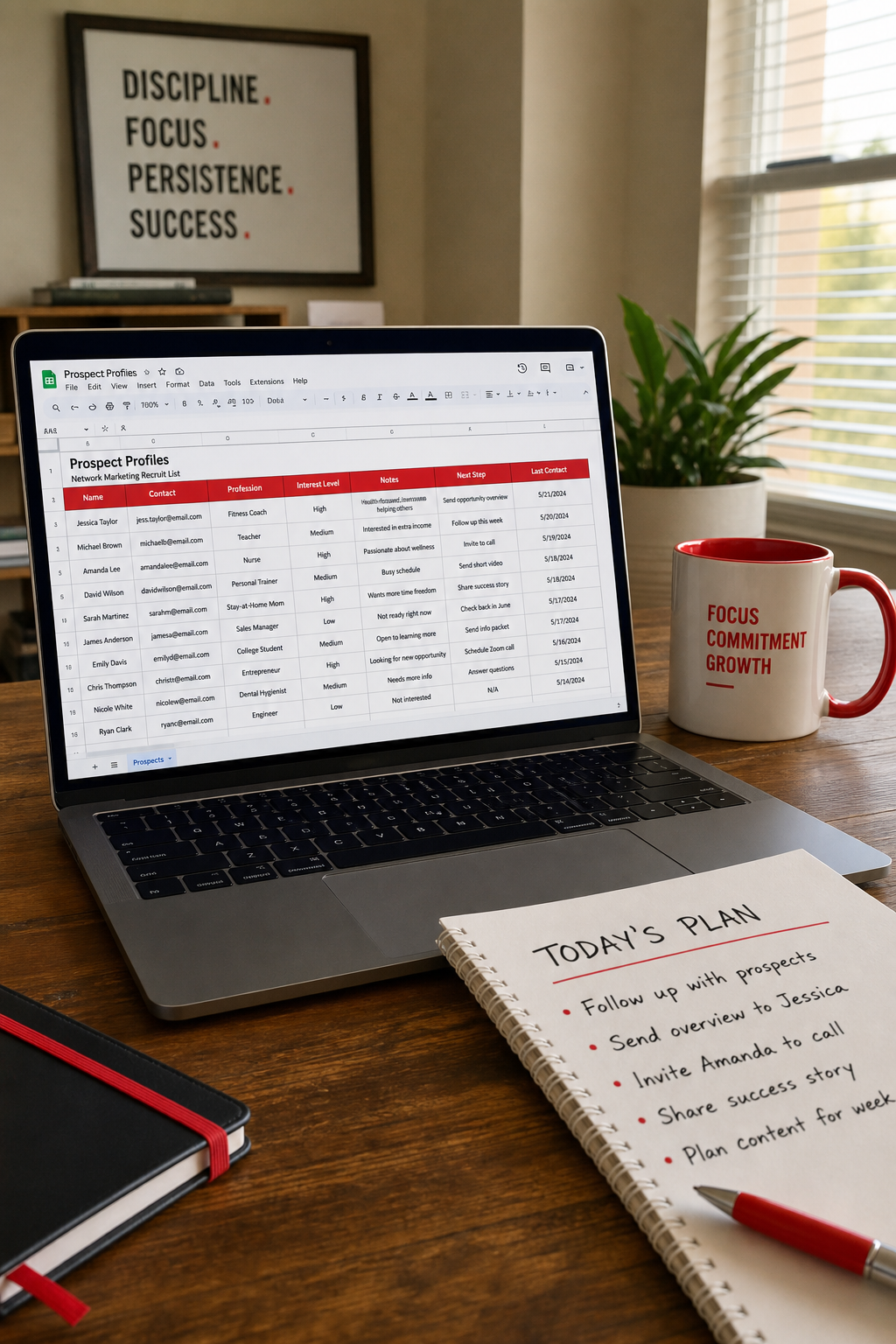
Key takeaway: The clearer your recruit picture, the less you’ll waste on cold leads that never bite.
Step 2: Build a Consistent Prospecting System
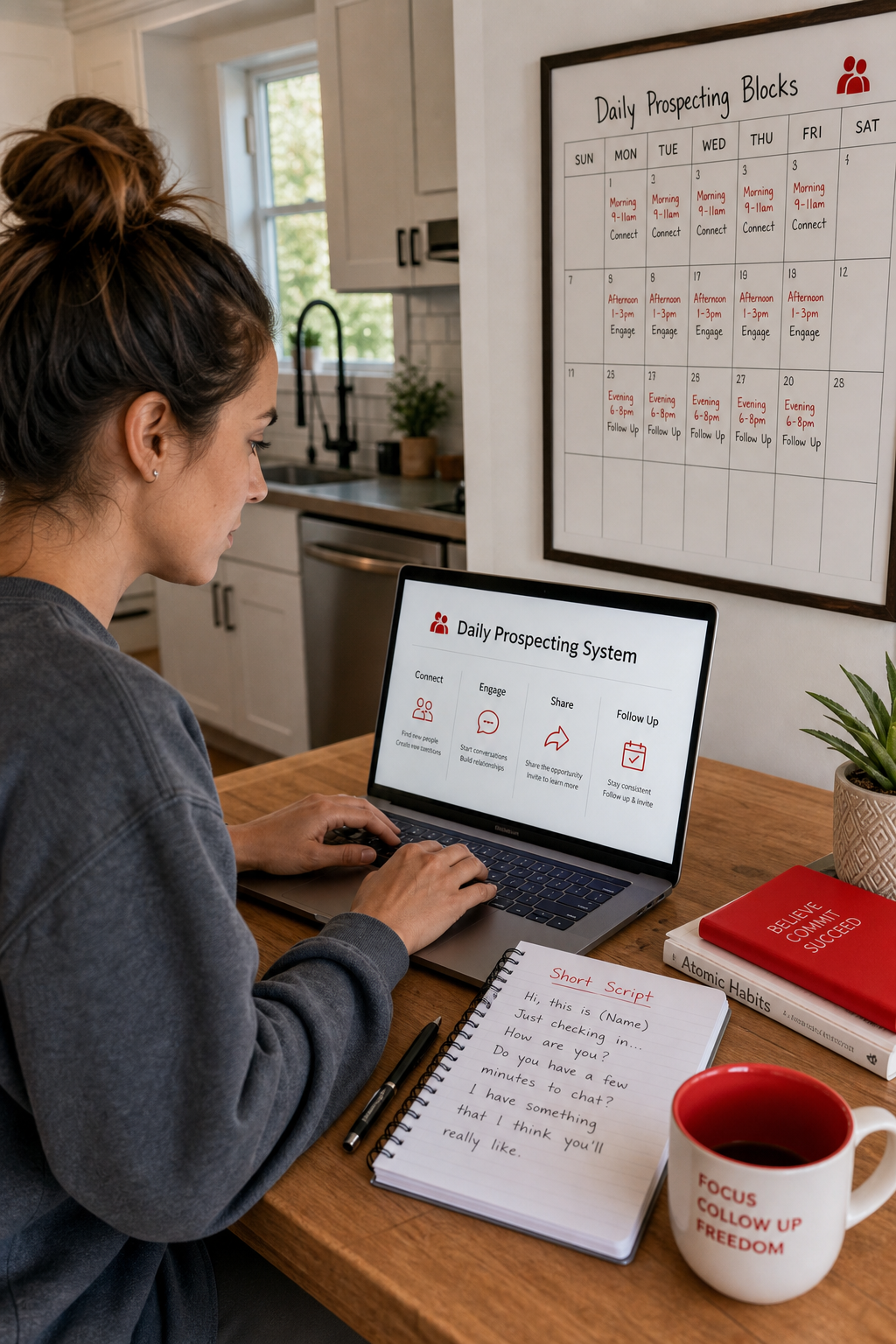
Now that you know who to look for, you need a repeatable engine that brings those names into your funnel every day. Consistency beats intensity , it’s better to talk to ten right‑fit prospects daily than to blast a hundred generic messages once a month.
Start with a daily quota. Set a realistic goal , for most home‑based marketers, 15‑20 new outreach attempts per day is a sweet spot. Use a simple spreadsheet or a free CRM to log each attempt: date, name, channel (DM, email, phone), and a quick note on response.
Choose the channel that feels most natural. For warm contacts, a personal text works best. For cold contacts, a brief LinkedIn connection request followed by a short, value‑first message gets higher reply rates. Research from a cold‑calling script guide shows that a clear opening line and a direct ask raise the chance of a conversation to over 10%.
Craft a script that mirrors the recruit profile you built. A three‑sentence template works well:
- Introduce yourself and mention a common interest (e.g., “I saw you’re part of the XYZ Facebook group”).
- State a quick benefit that aligns with their motivation (e.g., “I’ve found a way to earn extra income while caring for my kids”).
- Ask a low‑pressure question (e.g., “Would you be open to a quick chat about how it works?”).
Practice the script until it feels natural. Record a few practice calls, listen back, and trim any filler words. The goal is to sound like you’re having a genuine conversation, not reading a sales pitch.
To keep the system running, set a weekly review. Every Sunday, look at your spreadsheet, note who didn’t respond, and plan a follow‑up for the next week. This habit turns a chaotic outreach into a disciplined habit.
When you treat prospecting like a daily habit, you’ll see a steady stream of warm leads ready for the next step.
Step 3: Execute a Structured Follow‑Up Process
Most recruiters lose momentum after the first message. The data shows that the average distributor follows up only twice, while the sweet spot for conversion is four to seven meaningful touches. That gap is where many prospects slip away.
Build a follow‑up cadence that blends automation with personal touches. Here’s a simple five‑day rhythm:
- Day 1 – Send a thank‑you note right after the initial chat. Keep it short and include a link to a short video about the opportunity.
- Day 2 – Share a success story that matches the prospect’s motivation (e.g., a stay‑at‑home parent who now funds school trips).
- Day 4 – Send a value‑first piece: a free guide, a product demo, or a quick tip that solves a problem they mentioned.
- Day 6 – Invite them to a live webinar or a 15‑minute call.
- Day 9 – Follow up with a personal check‑in, ask if they have any new questions.
Automation tools can schedule these emails, but the first and last touches should be hand‑written or sent via a personal DM. That human element signals you care.
Track two lead‑measure metrics: exposure count (how many prospects you’ve reached) and follow‑up rate (percentage of contacts you’ve touched more than once). According to independent industry research, businesses that track daily activity metrics grow significantly faster than those that only look at sales figures (official source).
When a prospect asks a question, reply within 24 hours. Speed builds trust. If they’re silent after the third touch, send a gentle “just checking in” note. If there’s still no reply after the fifth, you can archive them and focus on hotter leads.
To keep the process from becoming a memory game, use a simple CRM reminder or a calendar block titled “Follow‑up: [Name]”. When the reminder pops, you know exactly what to say because you’ve already drafted the message in your script library.
By treating follow‑up as a system, you turn a shaky, memory‑based process into a reliable engine that fuels recruitment growth.
Step 4: Use Advanced Recruiting Tactics
When you’ve nailed the basics, it’s time to add a few high‑impact moves that seasoned leaders use to accelerate growth. These tactics are not magic tricks; they’re proven ways to add social proof, create urgency, and duplicate success.
First, try the three‑way call. Bring a new prospect, your sponsor, and a top performer onto the same line. The guest hears real success stories and sees a clear path to results. The sponsor can answer objections on the spot, and the prospect feels less pressure because the conversation feels more like a peer discussion. An experienced leader breaks down the exact script on their site, noting that the third voice adds credibility and speeds up decision‑making.
Second, use scarcity wisely. Offer a limited‑time bonus that aligns with the prospect’s motivation, for example, a free coaching session for the first five people who sign up this month. The key is to keep the offer genuine; empty promises erode trust.
Third, create an ambassador program. Identify your most active team members and give them a simple “share my story” kit: a short video, a one‑page PDF, and a personal link. When they post it to their socials, you get fresh exposure without extra work. Track which ambassadors bring in the most leads and reward them publicly.
Fourth, run a targeted webinar that solves a specific pain point, such as “How to earn $500 a month from home while caring for kids.” Promote it to your warm market first, then to the cold market with a short invitation message. The webinar acts as a group presentation that can convert multiple prospects at once.
Finally, automate the handoff. After a prospect signs up for a webinar, send them an automated welcome email that includes a link to the Unlocking the Secrets of Network Marketing article. This resource reinforces the basics while you focus on personal follow‑ups.
Conclusion
We’ve walked through a full recruiting playbook: define the right person, set up a daily prospecting habit, follow up with a proven cadence, and add high‑impact tactics like three‑way calls and ambassador programs. When you treat each step as a repeatable system, you stop guessing and start measuring. The result is a growing downline that feeds on itself, giving you the residual income and freedom you set out to achieve.
If you want more depth on building a high‑performing team, check out the Advanced Network Marketing Strategies guide. It dives into automation tools, leadership training, and scaling beyond six figures , the next logical step after you master recruiting.
Remember, recruiting is a marathon, not a sprint. Keep your profile sharp, prospect every day, follow up like a pro, and sprinkle in those advanced moves. Soon you’ll see a steady stream of new partners, and your business will finally feel like the engine you’ve always imagined.
FAQ
How many prospects should I reach out to each day?
Most successful home‑based marketers aim for 15‑20 new contacts per day. This number balances quality and volume, giving you enough chances to find matches without burning out. Adjust the quota based on your schedule , if you have more free time, push toward 30. The key is consistency; a steady daily rhythm beats occasional large bursts.
What’s the best way to track my recruiting activity?
Use a simple spreadsheet or a free CRM. Log the name, contact method, date of first outreach, and each follow‑up touch. Add columns for motivation and availability so you can filter for high‑potential leads. Review the sheet weekly to spot patterns, such as a drop in response rates, and tweak your script accordingly.
How can I make my cold‑market messages feel personal?
Start by researching the prospect’s profile , look for a recent post, a shared group, or a hobby. Mention that detail in your opening line, then tie it to a benefit they care about. For example, “I saw you love hiking; I’ve built a side hustle that lets me fund my next trail adventure.” This shows you’ve done the homework and aren’t just spamming.
When should I use a three‑way call?
Schedule a three‑way call after a prospect shows genuine interest, such as after they attend a webinar or ask for more details. The call adds a third voice , usually a top performer , who can answer questions and provide social proof. It works especially well for people who need validation before committing.
What’s an effective follow‑up cadence?
Start with a thank‑you note on day 1, a success story on day 2, a value piece on day 4, an invitation on day 6, and a personal check‑in on day 9. Adjust based on the prospect’s responsiveness. The goal is to stay on their radar without overwhelming them.
How do I keep my team motivated to recruit?
Recognize daily activity, not just final numbers. Celebrate the team member who logged the most outreach calls this week, share their script tweaks, and reward them with a small perk. Pair recognition with training , host a short “prospecting hacks” session every Friday to keep skills sharp and morale high.
Can I automate my follow‑up without losing the personal touch?
Yes. Use email automation for the first few touches , a thank‑you, a video link, and a PDF , but add a personal note in the subject line that mentions something specific you learned in your conversation. Then, manually handle the later touches (the invitation and personal check‑in) to keep the connection warm.
What metrics should I watch to know my recruiting is on track?
Track two lead‑measure metrics: daily exposure count (how many prospects you reach) and follow‑up rate (what percent you contact more than once). Pair these with lag‑measure metrics like new recruits per week. When exposure starts to dip, you’ll see a lag in recruits a few days later, giving you a chance to correct the pipeline early.


